For many adults, falling asleep is not the primary challenge; staying asleep is.
Waking up between 2:00 AM and 4:00 AM—a condition clinically known as sleep maintenance insomnia—is one of the most frequent complaints addressed in primary care. While it can be distressing, it is often a physiological response to stress, age-related changes in sleep architecture, or environmental factors rather than a sign of a serious disorder.
Understanding how sleep is regulated—and why quality sleep and overall health are closely connected—is the first step toward managing these early-morning awakenings more effectively.
The Physiology Behind Sleep Maintenance Insomnia
Sleep is not a uniform state of unconsciousness. It occurs in 90-to-120-minute cycles that alternate between Rapid Eye Movement (REM) sleep and non-REM sleep.
As the night progresses, the architecture of these cycles changes:
- Decreased Deep Sleep: Most deep, restorative (slow-wave) sleep occurs in the first third of the night.
- Increased REM Activity: The second half of the night is dominated by lighter REM sleep.
- The Cortisol Awakening Response: In the early morning hours, the body naturally begins to secrete cortisol to prepare for wakefulness.
If you are suffering from sleep maintenance insomnia, this natural transition into lighter sleep often results in a full awakening. Once awake, the “sleep drive” (the body’s hunger for sleep) is significantly lower than it was at bedtime, making it difficult to return to unconsciousness.
Sleep Maintenance Insomnia and the Cycle of Anxiety
A brief awakening is biologically normal. However, the psychological reaction to the awakening often transforms a minor disturbance into a chronic issue.
When a patient checks the clock or worries about the next day, the sympathetic nervous system activates the “fight or flight” response. This releases adrenaline and cortisol, increasing heart rate and body temperature. This creates a conditioned negative response to the bed itself, a key driver of chronic sleep maintenance insomnia.
Evidence-Based Strategies to Manage Sleep Maintenance Insomnia
The following strategies are drawn from Cognitive Behavioral Therapy for Insomnia (CBT-I), the gold-standard first-line treatment recommended by the American College of Physicians.
1. Eliminate Clock-Watching
Clock-watching serves no clinical function and acts solely as a source of cognitive arousal. Knowing the time triggers “sleep math” (e.g., “I only have three hours left”), which elevates anxiety.
- Strategy: Turn clock faces away from the bed or block the display to prevent the immediate stress response.
2. Practice “Stimulus Control”
If you cannot return to sleep after approximately 20 minutes, do not remain in bed trying to force it. This creates a psychological association between the bed and wakefulness.
- Strategy: Leave the bedroom. Go to a quiet, dimly lit room and engage in a non-stimulating activity, such as reading. Return to bed only when you feel sleepy.
3. Use Diaphragmatic Breathing
To counter the physiological stress response, you must manually activate the parasympathetic nervous system (the “rest and digest” system).
- Strategy: Practice slow, deep abdominal breathing. Inhale deeply through the nose for a count of four, and exhale slowly through the mouth for a count of six.
4. Perform a “Cognitive Shuffle”
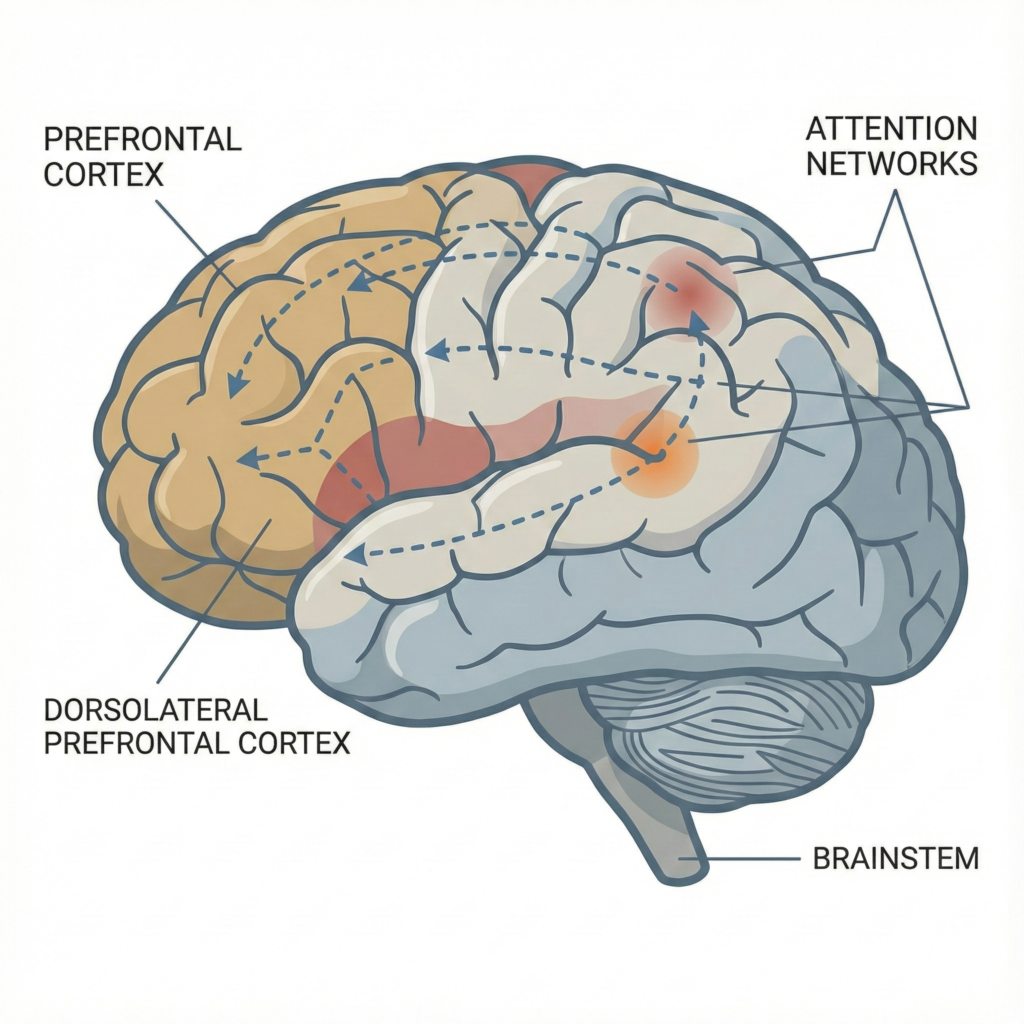
The prefrontal cortex is often impaired during night wakings, making worries feel catastrophic.
- Strategy: Distract the brain with neutral imagery. Visualize a familiar, calm sequence—such as walking through a park—in high detail to interrupt ruminative thinking.
5. Address Daytime Factors Affecting Sleep Maintenance Insomnia
Fragmented sleep is often a result of behaviors that occur 12–16 hours prior.
- Alcohol: While alcohol is a sedative, it causes a “rebound effect” as it is metabolized, triggering wakefulness later in the night.
- Caffeine: The half-life of caffeine is roughly 5–7 hours. Consumption after 2:00 PM can reduce sleep quality significantly.
When to Consult a Physician
While occasional awakenings are common, clinical evaluation is warranted if sleep maintenance insomnia:
- Occurs three or more nights per week for more than three months.
- Is accompanied by loud snoring or gasping (signs of Sleep Apnea).
- Significantly impairs daytime functioning.
Summary
Waking at 3:00 AM is a physiological event, not a failure of discipline. By removing performance pressure and utilizing relaxation techniques, the body can often self-regulate.
The most effective approach is paradoxical: Stop trying to force sleep. Instead, focus on resting calmly. Sleep is a passive process that occurs when we create the right conditions for it.
Disclaimer: This content is intended for educational purposes only and should not be perceived as medical advice, diagnosis, or treatment. Always consult with your healthcare provider regarding any questions about a medical condition.
References
- Riemann, D. et al. The hyperarousal model of insomnia: a review of the concept and its evidence. Sleep Med. Rev. 14, 19–31 (2010).
- Carskadon, M. A. & Dement, W. C. Normal human sleep: an overview. In Principles and Practice of Sleep Medicine (eds Kryger, M. H., Roth, T. & Dement, W. C.) 15–24 (Elsevier, 2017).
- Van Cauter, E. & Turek, F. W. Endocrine and other biological rhythms. In Endocrinology (eds DeGroot, L. J. et al.) 2489–2498 (Elsevier, 2016).
- Perlis, M. L., Shaw, P. J., Cano, G. & Espie, C. A. Models of insomnia. Sleep Med. 12, 417–426 (2011).
- Qaseem, A. et al. Management of chronic insomnia disorder in adults: a clinical practice guideline. Ann. Intern. Med. 165, 125–133 (2016).
- Morin, C. M. & Benca, R. Chronic insomnia. Lancet 379, 1129–1141 (2012).
- Roehrs, T. & Roth, T. Sleep, sleepiness, sleep disorders and alcohol use and abuse. Sleep Med. Rev. 5, 287–297 (2001).
- Drake, C. et al. Caffeine effects on sleep taken 0, 3, or 6 hours before bedtime. J. Clin. Sleep Med. 9, 1195–1200 (2013).