
Chronic inflammation is now recognized as a central driver behind many long-term health conditions, from heart disease to joint disorders. As researchers look beyond pharmaceuticals, certain traditional foods are gaining renewed scientific attention. One of them is Black cumin seed, and inflammation is increasingly studied together as researchers explore how certain traditional foods may help support the body’s inflammatory balance.
Current research suggests that black cumin seed and inflammation are connected through multiple biological pathways, including immune signaling, oxidative stress regulation, and cellular response mechanisms.
This article breaks down what the research shows, how black cumin seed works at a cellular level, and why it stands out in the crowded world of anti-inflammatory nutrition.
Understanding Inflammation and Why It Matters:
Inflammation itself is not the enemy. It is a vital biological response that helps the body heal and defend itself. The problem arises when inflammation becomes chronic and unresolved.
Long-term inflammation has been linked to:
- Heart and blood vessel disease
- Joint pain and stiffness
- Autoimmune conditions
- Metabolic dysfunction and insulin resistance
- Accelerated cellular aging
In many people, inflammation persists quietly for years, damaging tissues before obvious symptoms appear. This has led researchers to focus less on symptom suppression and more on lowering systemic inflammation at its root.
The Science Behind Black Cumin Seed and Inflammation:
Black cumin seed has been used for centuries in traditional medicine, but modern science is now explaining why it has such wide-ranging effects.
The key lies in its bioactive compounds, particularly thymoquinone.
Thymoquinone is not a single-target compound. Instead, it acts across multiple biological systems, a rare characteristic among natural foods.
Research indicates that black cumin seed works by:
- Reducing inflammatory signaling molecules
- Limiting oxidative stress that damages cells
- Calming immune overactivation without suppressing immunity
- Protecting tissues from long-term inflammatory damage
This multi-pathway action is what separates black cumin seed from many popular anti-inflammatory remedies.
How Black Cumin Seed Compares With Other Anti-Inflammatory Foods?
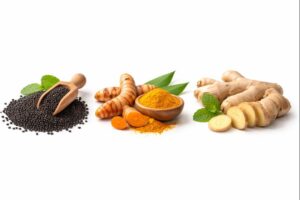
Turmeric and ginger are widely respected for their anti-inflammatory properties, and rightly so. Turmeric’s curcumin and ginger’s gingerols are powerful compounds. However, both tend to act through more limited pathways.
Black cumin seed stands out because it:
- Targets inflammation, oxidative stress, and immune imbalance simultaneously
- Works at the cellular signaling level rather than just symptom relief
- Shows consistent effects across different inflammatory markers
In comparative research, black cumin seed has demonstrated the ability to lower systemic inflammation markers more broadly than single-compound foods. This doesn’t mean turmeric or ginger are ineffective—it means black cumin seed operates on a wider biological canvas.
Immune Balance Without Immune Suppression:
One of the most important findings about black cumin seed is its effect on the immune system.
Many anti-inflammatory drugs work by suppressing immune activity. While this can reduce inflammation, it may also leave the body more vulnerable to infections or impair natural healing.
Black cumin seed behaves differently.
Studies suggest it helps regulate immune responses, meaning:
- Overactive immune signaling is reduced
- Protective immune functions remain intact
- The body maintains its ability to defend itself
This is especially relevant for individuals dealing with chronic inflammatory conditions, where the immune system is often in a state of constant activation.
Antioxidant Support and Long-Term Cellular Protection:
Inflammation and oxidative stress are closely linked. Free radicals generated by oxidative stress can damage cells, triggering further inflammation—creating a self-perpetuating cycle.
Black cumin seed contains strong antioxidant compounds that:
- Neutralize free radicals
- Protect cell membranes and DNA
- Reduce inflammation-induced cellular damage
By addressing oxidative stress alongside inflammation, black cumin seed helps interrupt this destructive cycle rather than just dampening its symptoms.
Practical Ways People Use Black Cumin Seed:
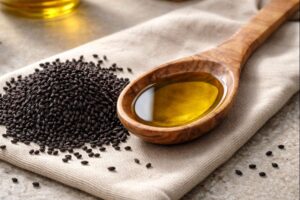
One reason black cumin seed is gaining attention is its practical versatility. It can be incorporated into daily routines in several forms:
- Whole seeds – added to food or lightly toasted
- Powder – mixed into meals or drinks
- Oil – taken in small amounts or added to food
Consistency matters more than quantity. Small, regular intake appears more beneficial than occasional high doses.
It’s important to be clear: black cumin seed is not a replacement for medical treatment. However, as part of a long-term lifestyle approach, it can play a supportive role in managing inflammation.
Ancient Food, Modern Evidence:
What makes black cumin seed particularly compelling is how well it bridges traditional knowledge and modern science. Cultures have valued it for centuries, but today’s research is uncovering mechanisms that explain its effects in precise biological terms.
This reinforces a broader insight emerging in nutrition science:
Some of the most powerful health tools are foods, not pharmaceuticals.
When used consistently and responsibly, certain foods can influence fundamental processes like inflammation, immune balance, and cellular protection.
What This Research Does—and Does Not—Mean:
While the research is promising, it’s essential to maintain realistic expectations.
- Black cumin seed supports inflammation control; it does not “cure” disease
- Results depend on consistency, diet, lifestyle, and individual biology
- It works best as part of a broader anti-inflammatory approach
From a scientific perspective, interest in black cumin seed and inflammation continues to grow as researchers explore nutrition-based strategies for long-term inflammatory balance.
Conclusion:
Black cumin seed is emerging as one of the most effective natural anti-inflammatory foods studied to date—not because it targets a single pathway, but because it works across inflammation, oxidative stress, and immune regulation simultaneously.
Its strength lies in balance rather than force. Instead of suppressing the body, it supports the systems designed to protect it.
In a world increasingly shaped by chronic inflammation, ancient foods backed by modern evidence may hold more value than we once believed.


Pingback: 5 Curcumin Benefits for Healthy Aging: What Research Suggests